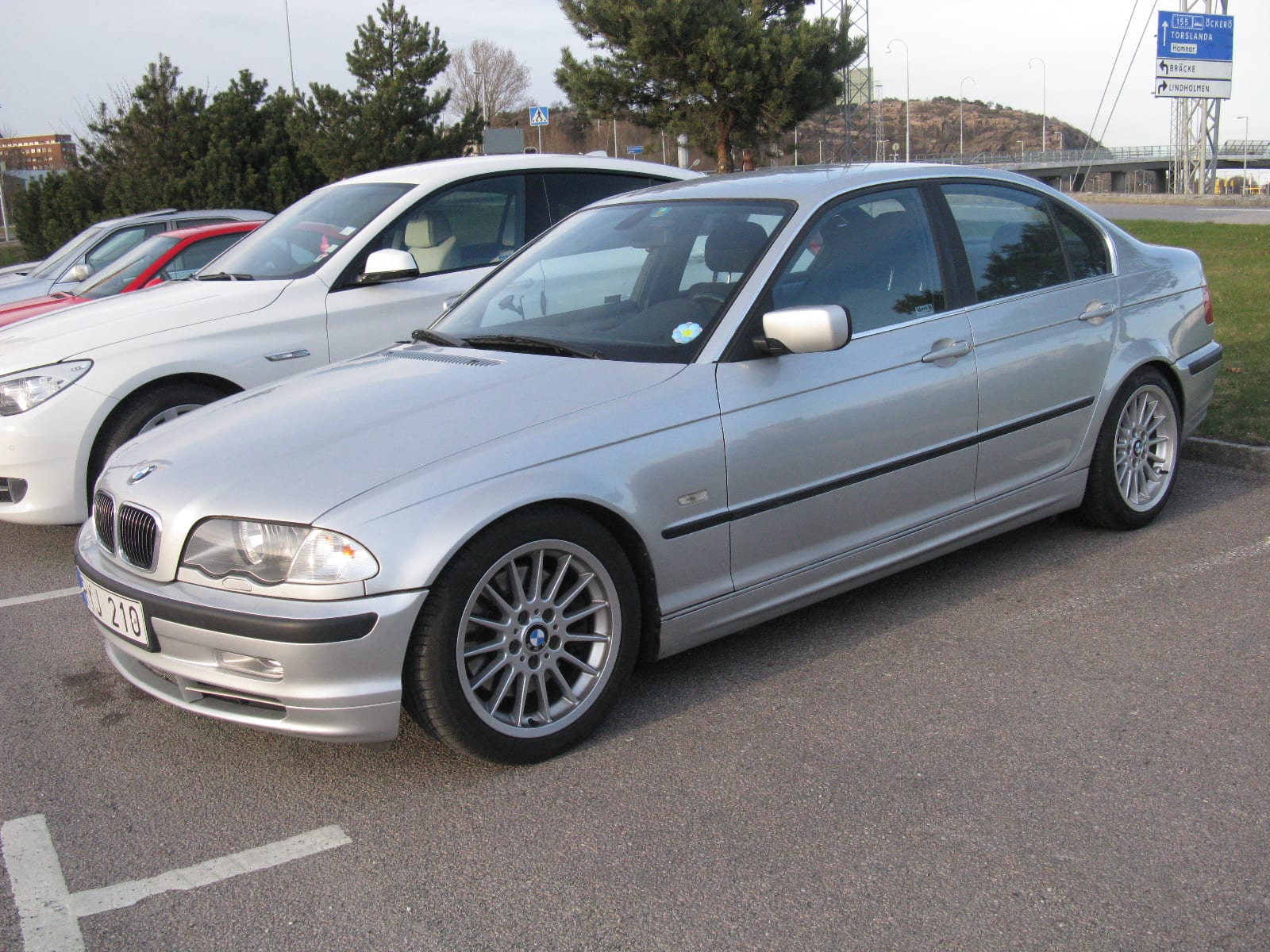
After a coolant drain, the BMW E46 330i may appear ready before the system has been properly vented. A full expansion tank is only the starting point. BMW's factory procedure also requires venting, a warm-up, a cold-level recheck, and inspection for leaks. This guide covers the E46 330i sedan with the M54 engine. Other models, including the M3, require their own service instructions. BMW's original M54 model information.
Safety: Work only on a cold engine. Opening a hot pressurized cooling system can cause severe burns. Stop the engine if it overheats and diagnose the fault before driving again. BMW coolant service warning.
The BMW M54 coolant bleeding procedure
BMW TIS 17 00 039 gives a defined sequence for the E46 330i M54. Start with the engine cold. Open the expansion-tank cap and vent screw. Switch on the ignition. Set the cabin heater to maximum temperature and the blower to a low speed. BMW notes that this opens the heater valves. Add only recommended coolant, pouring slowly. Close the vent screw when bubble-free coolant emerges. These steps are documented in the first BMW TIS page.
- Confirm the car's engine and cooling-system configuration. The procedure below is for the M54-powered E46 330i sedan.
- Allow the engine to cool completely.
- Open the expansion-tank cap and vent screw carefully.
- Switch the ignition on, set maximum cabin heat, and set the fan to low speed.
- Add recommended coolant slowly. Close the vent screw when coolant flows without bubbles.
- Fill to the maximum cold-level float mark, then close the expansion-tank cap.
- Allow the engine to warm until the thermostat opens, monitoring for leaks or overheating.
- After a complete cool-down, check the float again and adjust the level if needed. Inspect for leaks.
BMW's second TIS page covers the maximum cold-fill mark, warming until the thermostat opens, and the final cold-level check. Do not improvise a torque value for the vent screw. Use the current repair instructions for the exact hardware and VIN.
How to read the expansion-tank float
The float needle has separate minimum and maximum cold-fill markings. BMW states that the upper edge of the expansion tank should sit between the two markings when the level is correct. The tank reference marking corresponds to approximately 20 degrees C (68 degrees F). For the cold-level check, BMW specifies coolant at no more than 30 degrees C (86 degrees F), or at least cooled to ambient temperature if ambient temperature is higher. See the factory float instructions.
A reading immediately after driving cannot be compared directly with a fully cold reading. If the level drops repeatedly on consistent cold checks, investigate for a leak instead of assuming that more bleeding is the only answer.
Bleeding issue or coolant leak?
| Observation | Next check |
|---|---|
| Level changes just after a refill | Repeat the BMW venting procedure and compare only cold readings. |
| Fresh coolant near the expansion tank | Dry the area, then inspect hose locks, seals, and the first fresh leak trace. |
| Repeated cold-level loss | Arrange a pressure test using the correct BMW adapter and procedure. |
| Inconsistent heater output after service | Verify that the heater circuit was vented using BMW's specified settings. |
| Overheating or a temperature warning | Stop safely. Let the engine cool and investigate before driving. |
The table is a diagnostic starting point, not proof of a particular failed part. BMW's venting instruction and cooling-system pressure-test instruction provide the underlying service procedures.
Pressure testing requires the correct adapter
BMW provides cooling-system pressure-drop tests and separate checks for the expansion-tank cap. An important caution appears in the archived TIS documents: two E46 330xi M54 procedures specify different tool sets and applied test pressures. Compare this BMW pressure-test procedure with the alternate procedure. Do not combine the pressure from one procedure with the adapter from another. This article intentionally omits a universal pressure setting. Use the test plan applicable to the vehicle's VIN and tool configuration.
BMW also notes that coolant residue can cause the cap's pressure-relief valve to stick. That makes cap testing worthwhile when indicated, but it does not prove that the cap caused a particular coolant loss. Test before replacing parts. BMW's cap-test note.
Expansion tank, hose connections, and thermostat
BMW's M54 expansion-tank instructions show retaining locks at the hose connections. During installation, BMW directs checking the O-rings, warns against applying anti-seize to them, and requires the tank retaining lug to engage its bracket. Those are useful inspection points after a reservoir repair. The illustrated procedure is for an E46 330i Touring, so confirm the sedan's exact hardware and parts by VIN. BMW expansion-tank service instruction.
A leak near the front of the engine does not automatically identify the thermostat. Inspect the hose joints and housing for the first fresh coolant trace. BMW's M54 thermostat replacement instructions call for draining coolant, disconnecting hoses, removing the housing, and then venting and checking for leaks after reassembly. The instruction references a separate torque table. This article does not reproduce a torque value because exact hardware applicability has not been verified. BMW thermostat service instruction.
Parts selection
Before ordering a radiator, expansion tank, thermostat, or hose kit, establish the failure location and check the VIN. Transmission-related cooling connections, hose locks, and reservoir hardware can vary. A pressure tester must also match the correct BMW adapter and test procedure. No affiliate products appear here because a current product with verified application-specific fitment was not established. No commissions are earned from these references.
Frequently asked questions
Can I fill the tank and drive immediately?
No. BMW calls for venting, warming until the thermostat opens, then a cold-level recheck. Venting steps and cold-level check.
Should the heater be on during bleeding?
Yes. BMW specifies ignition on, maximum heater temperature, and a low fan setting. Factory instructions.
How cold must the engine be for a level check?
BMW specifies a maximum coolant temperature of 30 degrees C (86 degrees F) for its cold-level check. Factory specification.
Should I replace the expansion tank after any coolant loss?
No. Inspect the tank, seals, hose locks, and surrounding joints. Use a correct pressure test when necessary. BMW tank installation cautions.
What pressure should I use for leak testing?
Use the exact BMW procedure and adapter for your car. Archived test setups differ, so a universal figure is not provided here. Test setup one and test setup two.
References and limitations
- BMW PressClub M54 model history
- BMW TIS venting page one
- BMW TIS venting page two
- BMW pressure test, first setup
- BMW pressure test, second setup
- BMW expansion-tank service
- BMW thermostat service
- BMW coolant safety warning
Technical disclaimer: Educational information only. Use current BMW service instructions for the exact VIN. Cooling systems can cause severe burns, and overheating can damage the engine. Stop if the vehicle differs from the stated application or safe tools are unavailable. Consult a qualified technician for unresolved overheating or coolant loss.