The Complete Guide to Repairing Porsche PDK Transmission Problems
A failed PDK does not automatically mean the transmission is junk. That is the main lesson from the long Rennlist thread that started this guide. For years, owners were told that many PDK faults required a complete replacement gearbox, usually with a quote somewhere in the $15,000 to $30,000 range. In many cases, the actual problem was a sensor, valve body, solenoid, wiring issue, fluid fill issue, or calibration problem.
This guide turns that scattered forum knowledge into one organized reference. It is aimed at 997.2 and 987.2 owners first, but much of the diagnostic logic also applies to 991.1 and 981 cars because they use closely related 7-speed PDK units. Later cars, Panamera units, Cayenne units, and Macan units are different enough that you should not assume every part or procedure carries over.
The goal is not to convince everyone to open a PDK on jack stands. Some of these repairs are realistic for experienced DIYers. Some are best handled by a Porsche independent shop or a transmission specialist. The important part is knowing what usually fails, what can be repaired, and what questions to ask before approving a complete transmission replacement.
Credit where it is due: this guide exists because of the Rennlist 997 Forum thread "Guide to Repairing a PDK Transmission", started by Rennlist member PV997 and expanded over years by owners and specialists sharing teardown photos, fault codes, sensor notes, resistance checks, PIWIS behavior, part-number research, and real repair outcomes. Department69 reorganized that community work into one practical guide, but the Rennlist community deserves the credit for making this repair path visible.
Quick answer: The 7DT45 and 7DT70 PDK transmissions used in 997.2, 987.2, 991.1, and 981 cars are repairable. The most common major faults are usually in the hydraulic control system or internal sensors, not the mechanical gearset. Start with PDK-specific fault codes and PIWIS live values before replacing parts.
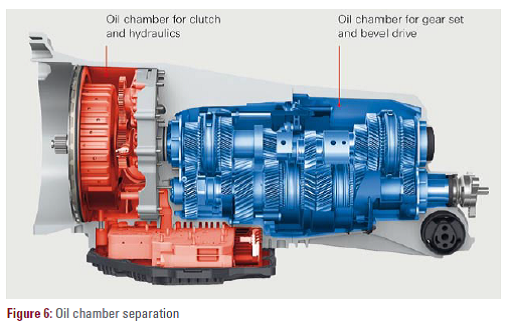
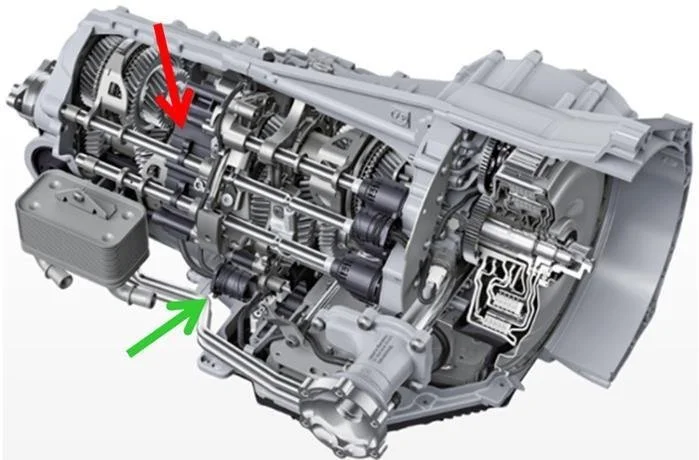
The PDK has separate hydraulic and gearbox sections. Understanding that split makes diagnosis much easier
Models this guide applies to
| Model group | PDK type / relevance | Notes |
|---|---|---|
| 997.2 911 Carrera, Carrera S, C4, C4S, Turbo, GT3 era PDK cars | Primary focus. 7DT45 for Carrera models, 7DT70 for Turbo/GT3 type applications. | Most of the thread and repair discussion centers here. Verify part numbers by VIN before ordering. |
| 987.2 Boxster and Cayman PDK cars | Primary/near-primary focus. | Very similar diagnostic logic. On Boxster/Cayman, some gearbox-end access may be easier because the transmission orientation differs from the 911. |
| 991.1 911 and 981 Boxster/Cayman PDK cars | Closely related, but updated. | The 991.1/981 PDK added changes such as gear oil pump/cooling arrangements and, on some cars, locking differential hardware. Many faults and repairs still overlap. |
| 982/718 with related 7DT PDK units | Some concepts may apply. | Use this article as diagnostic background, not as a procedure manual. Confirm with current workshop information. |
| 991.2 and newer 911 PDK cars | Not the main target. | The later PDK is substantially changed. Use caution when applying this guide. |
| Panamera, Cayenne, Macan PDK transmissions | Not directly covered. | These use different units and parts. Do not assume a Panamera sensor or procedure applies to a 911, Boxster, or Cayman. |
Difficulty, time, cost, and decision table
| Job / fault area | DIY difficulty | Typical access | PIWIS needed? | Cost reality |
|---|---|---|---|---|
| Read PDK codes and live values | Moderate | OBD/diagnostic port | Strongly preferred | Cheap if you have the tool, otherwise an indy diagnostic visit. |
| Clutch/hydraulic fluid service only | Moderate | Under car | Usually preferred; some DIY methods avoid command mode if only draining and refilling fluid. | Fluid cost plus time. Pan/filter work is more involved. |
| Temperature sensor repair | Moderate to advanced | Pan down, valve body area | Likely for correct refill if valve body is dropped. | Low part cost, but fluid/fill/tool time matter. |
| Valve body replacement | Advanced DIY / indy | Pan down, transmission stays in car | Yes, for calibration and fill. | Much cheaper than a gearbox, but not a casual job. |
| Individual solenoid replacement | Advanced DIY / transmission specialist | Valve body out | Yes, for calibration. | Potentially inexpensive parts, but diagnosis must be solid. |
| Distance sensor replacement | Expert DIY / specialist | Transmission removal or gearbox-end access depending on model | Yes, for calibration. | Part and labor are significant, but still far below many replacement gearbox quotes. |
| Speed sensor replacement | Expert DIY / specialist | Inside gearbox, near distance sensor | Yes, for calibration/checks. | Usually done while already inside the gearbox. Replacement options now exist, but verify fitment. |
| Clutch pressure sensor replacement | Expert DIY / specialist | Transmission out, clutch removed | Yes, for checks/calibration. | Sensors are available, but labor dominates. |
| Complete PDK replacement | Shop job | Transmission out | Yes | Most expensive option. Sometimes necessary, but it should not be the first diagnostic conclusion. |
What this guide covers
This guide covers the repairable failure areas that appeared repeatedly in the thread and later repair reports: valve body faults, solenoid faults, temperature sensor faults, gear shift rod position sensor faults, speed sensor faults, clutch pressure sensor faults, fluid and fill issues, adaptation and calibration problems, and the decision process between DIY repair, independent specialist repair, and full transmission replacement.
It does not replace Porsche workshop information. It also does not guarantee that every PDK can be saved. Gear damage, bearing failure, clutch destruction, damaged cases, contaminated fluid, previous bad repairs, and incorrect calibration can still turn a repairable transmission into a rebuild or replacement job.
Before You Start
The PDK is repairable, but it is not casual
The best way to think about the PDK is this: it is an automated manual transmission controlled by hydraulics, sensors, and a separate transmission control unit. The mechanical gearbox is usually not the first thing to fail. The weak points are more often the parts that tell the control unit what is happening or the hydraulic parts that carry out its commands.
That is good news, because many of those parts can be diagnosed and repaired. It is also bad news, because the PDK can throw secondary codes that make the problem look bigger than it is. A failing distance sensor can trigger gear engagement faults. A hydraulic pressure problem can create ratio or overheating codes. A bad calibration can mimic a mechanical problem. A low fluid level can make the transmission look broken.
Do not skip this: A generic OBD scanner is not enough. You need PDK-specific codes and, ideally, PIWIS live values. Durametric can read many PDK faults, but it cannot perform the commanding, bleeding, filling, teach-in, and calibration functions that PIWIS can.
Tools and information you need before approving any major repair
| Need | Why it matters | Notes |
|---|---|---|
| Full PDK fault code report | The first code and the current code matter. Secondary codes can mislead you. | Save the complete report before clearing anything. |
| PIWIS or equivalent Porsche-level diagnostic access | Needed for live values, actuation tests, fill routines, calibration, handover, and teach-in. | A good independent Porsche shop is often the practical answer. |
| PDK live data | Distance sensor duty factors, speed sensor values, clutch pressure, solenoid current, and temperature values can separate root cause from symptom. | Do not rely only on code descriptions. |
| VIN-based parts verification | PDK part numbers vary by year, model, revision, and options. | Do not order from forum part numbers alone. |
| Fluid history | Low, burnt, wrong, or recently changed fluid can point toward fill or hydraulic issues. | Note whether the problem began after service. |
| Warning message color and drivability symptoms | A brief warning that clears is different from no drive, no reverse, or a red emergency message. | Do not road-test a car that is clearly binding, grinding, or refusing gear engagement. |
| A flatbed plan | Some repairs leave the car unable to move until calibrated or filled with PIWIS. | Plan transport before DIY work if the final step requires a shop. |
Warranty and shop reality
If the car has a Porsche warranty or a strong third-party warranty, a replacement transmission may be the easiest outcome for the owner. Outside of warranty, the economics change. A shop that knows PDK diagnosis can often repair the failed subsystem for a fraction of the replacement cost. The challenge is finding a shop that is willing to diagnose instead of following a replacement-only path.
When calling shops, do not simply ask, "Can you repair PDK?" Ask better questions: Can you read PIWIS live values? Have you replaced a PDK distance sensor? Can you perform PDK calibration and teach-in? Have you replaced PDK clutch pressure sensors? Do you replace valve bodies or only complete transmissions? Do you work with T-Design or other proven replacement sensor suppliers?
How the PDK Works, in Plain English
The two-chamber idea
The PDK has two distinct worlds inside it. One is the gearbox section, which contains gears, shafts, shift rods, forks, bearings, and related mechanical pieces. The other is the hydraulic section, which contains the valve body, solenoids, clutch fluid control, and the parts that hydraulically command gear selection and clutch engagement.
That split matters because a warning on the dash does not automatically mean the gearset failed. Many PDK faults happen in the hydraulic section or in the sensors that report position, speed, pressure, and temperature back to the TCU.
The PDK does not make decisions inside the transmission
The PDK hardware itself is not the brain. The TCU, located in the vehicle, makes the decisions. The transmission receives commands and sends back information. When people say a PDK was "reflashed," they are talking about the TCU, not software stored inside the gearbox. This distinction matters because a TCU issue is a different repair path than a transmission issue.
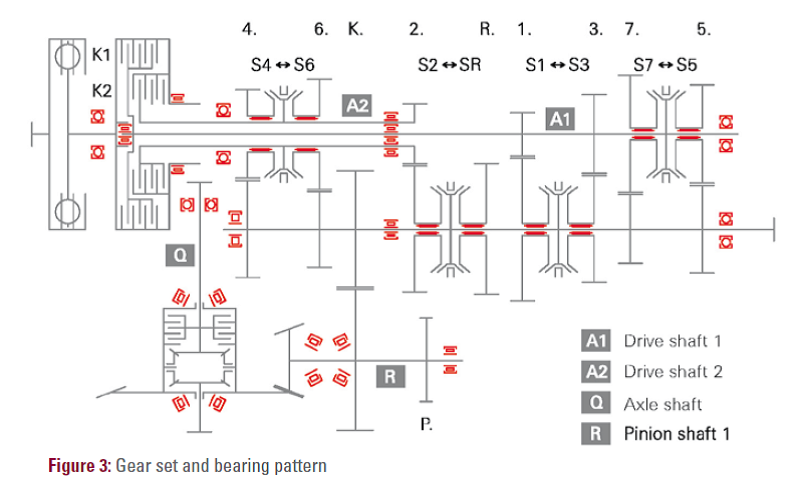
Two clutches, two gear families
The dual-clutch layout divides gears between two clutch/input shaft paths. Clutch 1 handles reverse and the odd gears: R, 1, 3, 5, and 7. Clutch 2 handles the even gears: 2, 4, and 6. During normal operation, the PDK can prepare the next gear on the inactive path and then overlap clutch control during the shift.
That means gear patterns matter. If a symptom affects one gear family more than the other, you may be looking at a clutch pressure, solenoid, hydraulic, or sensor issue related to that path. If it affects a specific shift rod or gear pair, the distance sensor data and gear selection hydraulics become more important.
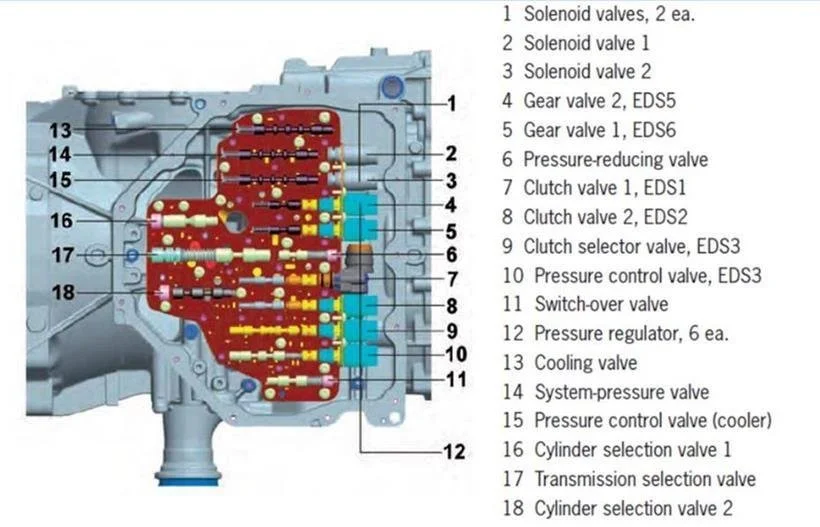
The valve body solenoids control clutch pressure, gear selection pressure, cooling flow, and failsafe behavior.
The four sensor groups
| Sensor group | What it tells the TCU | Typical failure clue |
|---|---|---|
| Temperature sensor | Clutch/hydraulic fluid temperature. | P0711, P172D, temperature warnings, emergency operation. |
| Distance sensor / gear shift rod position sensor | Where the four shift rods are during and after gear selection. | P1731, P1732, P1733, P1734, related P1735 to P1738 codes, stuck gear, no shift, no reverse. |
| Speed sensor | Input shaft speeds for the two clutch paths. | P173B/P173C or ratio/overtemperature behavior that does not make sense after other fixes. |
| Clutch pressure sensors | Hydraulic pressure delivered to clutch circuits. | P1706, P0841, P0846, P17B1/P17B2, pressure implausibility. |
Symptoms: What the Car Does Matters
PDK diagnosis starts with codes, but symptoms provide context. The same car may store a generic transmission control fault, a ratio fault, and a hydraulic fault. The behavior tells you which one is likely the root cause.
Symptom guide
| Symptom | Most likely areas to investigate first | Important notes |
|---|---|---|
| Transmission emergency operation / gearbox fault message | Read PDK codes. Check temp sensor, distance sensor, valve body, pressure sensors, and fill status. | The dash message alone is not diagnostic. |
| No reverse | Distance sensor, gear selection hydraulics, valve body, calibration, low fluid. | No reverse appears often in distance sensor and hydraulic cases. Do not assume one part without data. |
| Stuck in one gear or limp mode | Distance sensor, speed sensor, gear selection hydraulics, TCU response to implausible values. | A car may keep driving in the current gear, then refuse movement after shutdown. |
| No drive in D or R | Clutch pressure, hydraulic pressure, valve body, distance sensor, fluid level, calibration. | Do not repeatedly command gears if there is grinding or binding. |
| Harsh engagement, thump, or delayed engagement | Adaptation/calibration, fluid level, clutch pressure, solenoid control, clutch wear. | Especially relevant if it appears after service or after a repair. |
| Overtemperature codes | Real clutch slip, calculated slip from bad speed data, temp sensor fault, low/wrong fluid, cooling issue, pressure regulation. | P17F0 to P17F2 can be real or calculated. Look at live values. |
| Specific gears missing | Valve body solenoids, gear selection hydraulics, distance sensor, shift rod calibration. | Look for patterns by gear family and shift rod. |
| Faults appear when hot | Distance sensor, solenoid resistance/operation, pressure loss, fluid viscosity, heat-related electrical faults. | Many reported distance sensor failures were heat-related or intermittent at first. |
| Problem begins immediately after PDK service | Fluid fill procedure, wrong fluid, pan/filter issue, adaptation/calibration, connector disturbed. | Always look for the last thing touched. |
Fault Code Quick Reference
Fault codes are not a diagnosis by themselves. Treat them as a map to the next test. The most useful next step is usually to confirm the fault with live values, resistance checks, pressure values, or a PIWIS calibration result.
Use this as a first-pass guide only. Always confirm the full Porsche fault detail, freeze-frame data, and live values before ordering parts.
| Code or code group | Likely area | What it usually means | First checks |
|---|---|---|---|
| P0711, P172D | Temperature sensor / temperature signal | Known temperature sensor or wiring issue on early PDK units. | Check sensor resistance vs temperature, wiring repair, fluid/fill procedure. |
| P17F0, P17F1, P17F2 | Transmission overtemperature | May be real overheating or calculated overtemp from clutch slip or bad speed data. | Check actual temperature, fluid, cooler, clutch slip, speed sensor data, pressure regulation. |
| P1731, P1732, P1733, P1734 | Distance sensor / shift rod displacement sensor | One of the shift rod position channels is outside the valid range. | Use PIWIS to view distance sensor values/duty factor. Inspect harness. Plan for sensor replacement if confirmed. |
| P1735, P1736, P1737, P1738 | Distance sensor short-term or related shift rod faults | Often appears with P1731 to P1734 or during intermittent distance sensor failure. | Confirm live values and wiring before replacing parts. |
| P173B, P173C | Input shaft speed sensors | Speed sensor circuit fault for clutch/input shaft path. | Inspect speed sensor values, wiring, and consider replacement if gearbox is open. |
| P1706 | 5V sensor supply / clutch pressure sensor circuit | Often discussed as clutch pressure sensor related, but can also be a 5V reference or internal sensor short issue. | Measure pressure sensor circuits, 5V supply, and check whether distance sensor or harness is pulling down reference voltage. |
| P0841, P0846 | Pressure sensor values | Pressure sensor implausible value. | Compare clutch pressure live data, verify 5V supply, inspect wiring, pressure sensors, and hydraulic behavior. |
| P17B1, P17B2 | Clutch pressure / activation pressure | Implausible clutch activation pressure. | Check clutch pressure sensors, solenoid control, fluid level, and clutch mechanical condition. |
| P17B3, P17B4 | Clutch pressure overlap behavior | Clutch pressure remains too high during overlap switching. | Check pressure sensors, valve body, solenoid control, calibration, and clutch condition. |
| P17BB to P17BE | Clutch opening fault | Clutch unable to open or control pressure as expected. | Check hydraulic pressure, clutch pressure sensors, valve body, adaptation, and clutch condition. |
| P17D0 to P17D9 | Gear selection hydraulics | No shift rod moved, wrong shift rod moved, or gear selection hydraulic issue. | Check fluid fill, valve body/solenoids, distance sensor values, calibration result. |
| P1764 | Synchronization / engagement block / gear skip | Often a secondary symptom when gear selection or synchronization fails. | Do not assume root cause. Check distance sensor, hydraulics, and calibration. |
| P1765 | Gear disengagement lock | Gear cannot be disengaged as expected. | Check distance sensor values, hydraulic gear selection, valve body, and calibration. |
| P1771 to P1774 | Gear valve hydraulic faults | Valve body/gear valve hydraulic control issue. | Check solenoid resistance/current, fluid level, valve body, and whether a distance sensor fault is also present. |
| P177C, P17DA | Reverse/neutral hydraulic transition issues | Reverse not disengageable or hydraulic fault during neutral transition. | Check gear selection hydraulics, valve body, distance sensor data, and fluid. |
| P0730, P0731, P0732 | Ratio monitoring / clutch slip / speed data | Gear ratio does not match expected shaft speeds. | Check actual clutch slip, speed sensor data, clutch pressure, fluid, and calibration. |
| P1870, P1871, P1872 | Calibration / synchronization data | Shift rod, clutch, or hydraulic teach-in data invalid or incomplete. | Run proper PIWIS procedures only after root fault is repaired. These may be symptoms. |
| P174B, P174C, P174E, P0602 to P0605 | TCU software/coding/control unit | Control unit programming, EEPROM, coding, or software mismatch. | Do not blame the gearbox first. Verify TCU coding, programming, and hardware pairing. |
Code caution: P0700 is usually a gateway or general transmission fault. It tells you to read the actual PDK control unit faults. Do not diagnose a PDK from P0700 alone.
Diagnostic Flow: Start Here
Step 1: Save the complete fault report
Do not clear codes immediately. Save the full PDK report with freeze-frame data if available. Note which codes are current, which are stored, and which code returns first after clearing. Secondary codes can pile up after a failed shift event.
Step 2: Sort the codes into families
Temperature code family: P0711, P172D, P17F0 to P17F2.
Distance sensor family: P1731 to P1734, often with P1735 to P1738.
Pressure sensor and clutch pressure family: P1706, P0841, P0846, P17B1 to P17BE.
Gear selection hydraulic family: P17D0 to P17D9, P1764, P1765, P1771 to P1774, P177C, P17DA.
Ratio/speed family: P0730 to P0732, P173B, P173C.
Calibration/software family: P1870 to P1872, P174B/P174C/P174E, P0602 to P0605.
Step 3: Look at live data
With PIWIS or equivalent, look at distance sensor positions, shift rod values, speed sensor values, clutch pressure values, solenoid current, and temperature values. The thread repeatedly shows that live data can reveal what the static code list hides. For example, a distance sensor that outputs a fixed implausible duty factor is different from a hydraulic system that cannot move a rod even though the sensor values look reasonable.
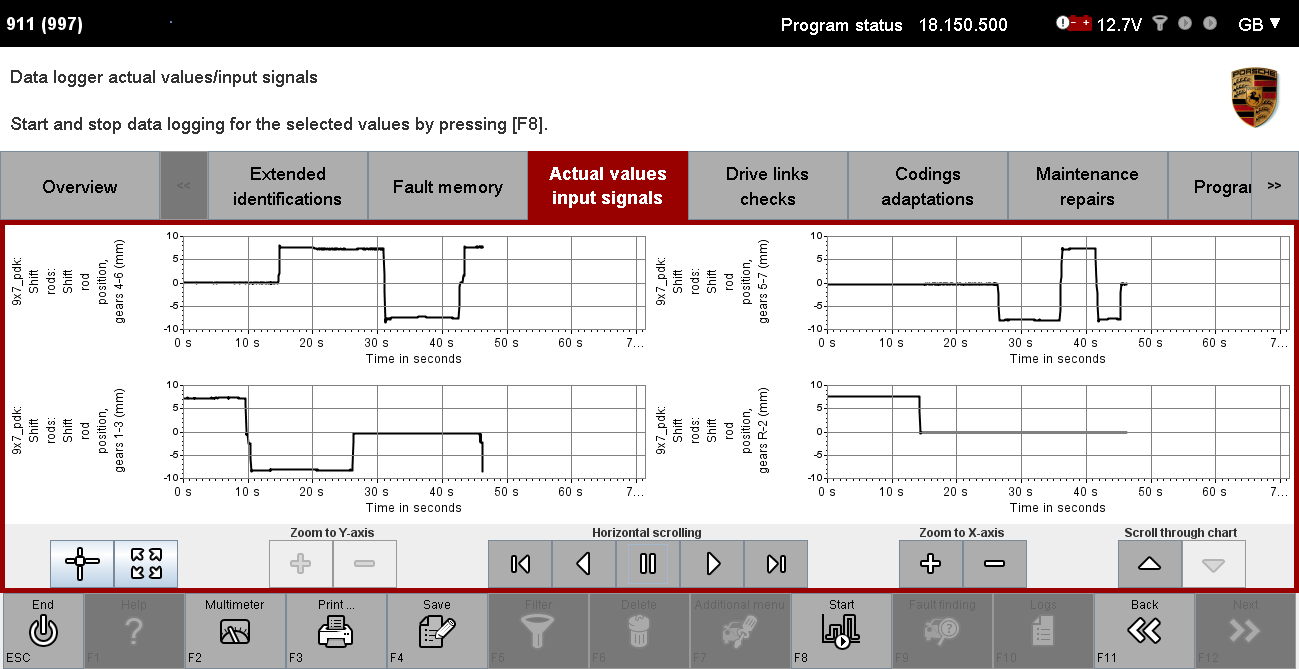
PIWIS can display shift rod and distance sensor values that are much more useful than a generic scan.
Step 4: Ask what changed recently
A PDK that fails right after a fluid service, valve body swap, TCU swap, or sensor repair should be diagnosed differently from a PDK that failed untouched on a hot day. After service, suspect fill level, calibration, coding, connector seating, and the exact procedure used. After a hot-drive intermittent failure with P173x codes, the distance sensor climbs much higher on the suspect list.
Step 5: Do not let the most expensive answer become the first answer
A complete transmission replacement can be the right answer if the gearbox is mechanically damaged, heavily contaminated, or previously misrepaired. But it should not be the automatic answer for a bad temperature sensor, valve body, clutch pressure sensor, distance sensor, TCU coding problem, or fluid fill problem.
Repair Area 1: Temperature Sensor Faults
Common codes and symptoms
The classic temperature sensor failure shows up with gearbox emergency operation and codes such as P0711 and P172D. The key point is that the transmission itself may be mechanically fine. The TCU is reacting to a bad or implausible temperature signal.
What fails
The early clutch fluid temperature sensor and its wiring/connection were known trouble areas. The sensor sits above the valve body area on 997.2 PDK cars, which means it can be reached without removing the transmission. Porsche offered a repair kit, commonly cited in the thread as part number 997.612.930.01. Verify current supersession and VIN fitment before ordering.
A temperature sensor fault can trigger a dramatic gearbox warning even when the mechanical transmission is not destroyed.
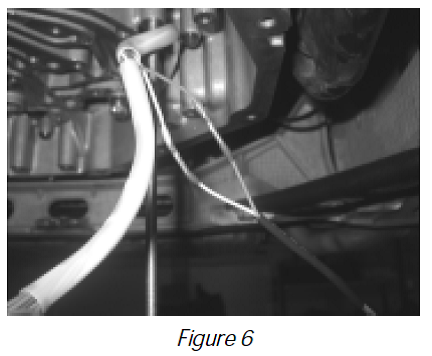
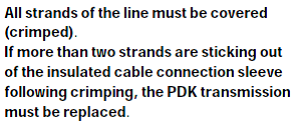
The temperature sensor repair involves splicing or crimping the replacement sensor wiring in the valve body area.
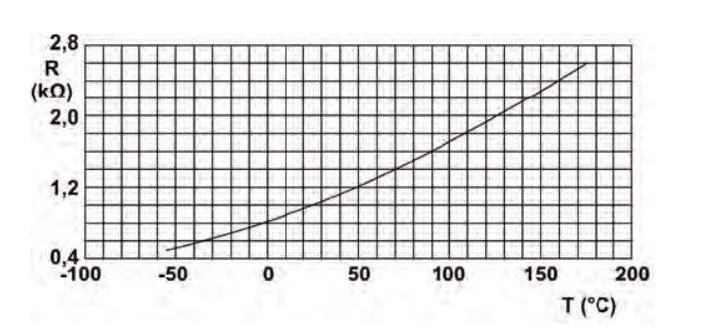
Resistance should be checked against fluid or ambient temperature; the thread cites about 950 ohms near 20 C.
Basic diagnostic checks
Confirm P0711 and/or P172D in the PDK control unit, not just a generic warning.
Let the car cool fully and compare the reported clutch fluid temperature to ambient temperature.
Measure sensor resistance at the accessible connector or at the TCU harness if you have the correct pinout.
Inspect wiring and previous splice/crimp work if the sensor was already replaced.
If the valve body is dropped or the pan is removed, plan the correct fluid refill procedure.
Repair summary
The repair is conceptually simple: access the valve body area, replace or splice in the sensor repair kit, seal the wiring properly with fluid-resistant materials, reassemble, refill correctly, and confirm the temperature reading is sane. The exact procedure depends on the model and how much hardware is removed to gain access.
Common mistake: Do not treat a bad temperature sensor as a failed gearbox. Also do not leave questionable wiring repairs inside the transmission. Heat, fluid exposure, and vibration punish lazy electrical work.
Repair Area 2: Valve Body and Solenoid Faults
Why the valve body matters
The valve body is the hydraulic command center. Porsche often calls it the electrohydraulic control unit, but transmission people will recognize it as the valve body. It contains solenoids that regulate clutch pressure, shift fork movement, cooling flow, and failsafe behavior. A large share of repairable PDK faults live here.
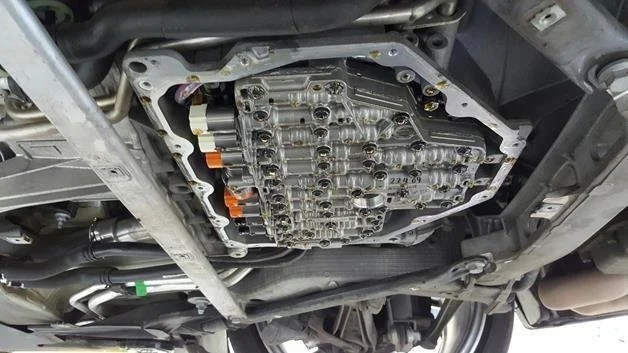
The valve body is accessible after removing the PDK oil pan. The transmission does not need to be removed for valve body access.
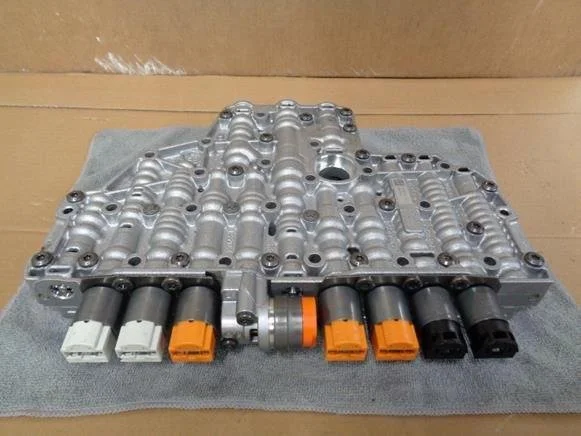
The valve body part number is visible on the bottom, which is why the existing unit should be checked before ordering.
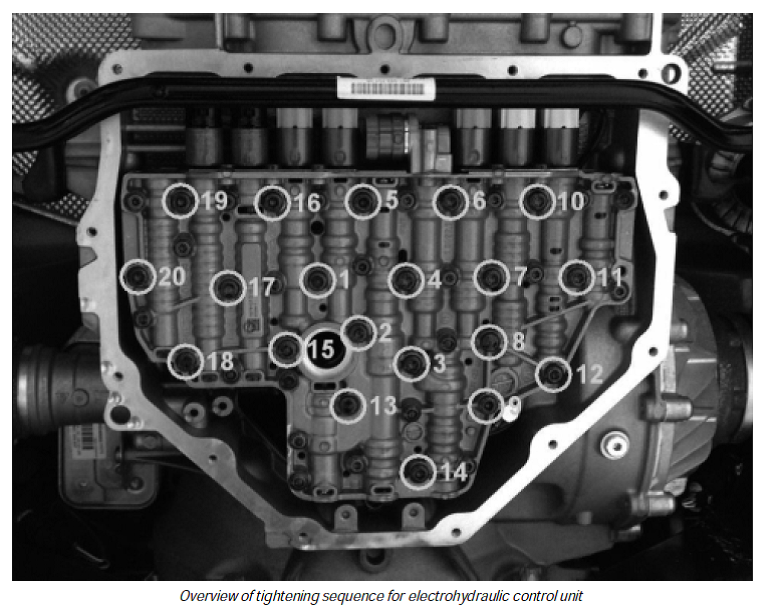
Only remove the circled valve body mounting fasteners; other screws hold the valve body assembly together.
Common signs of valve body or solenoid trouble
Specific gears unavailable or inconsistent.
Hydraulic gear valve faults such as P1771 to P1774.
Gear selection hydraulic faults such as P17D0 to P17D9.
P1764 or P1765 when paired with hydraulic behavior and no clear distance sensor failure.
Clutch pressure or ratio faults that point toward pressure regulation, especially when live data supports it.
Problems that change with temperature, fluid level, or recent service.
Valve body part number caution
The thread cites 9G1.317.897.00 as the 997.2 valve body part number and mentions later or similar-looking part numbers such as 9G1.317.897.05, 9G1.317.897.010, and 9G1.317.897.35. Do not order only from a forum post. Remove the pan if needed, read the part number on the existing valve body, and verify by VIN. Later 991 units may include additional features such as a check valve for start-stop behavior, so visual similarity is not enough.
Solenoid logic in simple terms
The valve body uses EDS pressure-regulating solenoids and MV on/off solenoids. The thread identifies EDS1 and EDS2 as clutch pressure control for the two clutch paths. EDS4 regulates overall system pressure. EDS3 is associated with auxiliary clutch cooling. EDS5 and EDS6 are involved in shift fork control rod movement. MV1 and MV2 are binary gear-selection control solenoids that work with the pressure control solenoids.
| Solenoid / function group | Role | Diagnostic clue |
|---|---|---|
| EDS1 | Clutch 1 pressure control for R, 1, 3, 5, 7. | Odd gear/reverse clutch pressure problems. |
| EDS2 | Clutch 2 pressure control for 2, 4, 6. | Even gear clutch pressure problems. |
| EDS3 | Auxiliary clutch cooling path. | Potential contributor to overtemperature behavior. |
| EDS4 | Overall hydraulic system pressure regulation. | Broad hydraulic pressure problems. |
| EDS5 / EDS6 | Shift fork control rod pressure paths. | Missing gear patterns or shift rod actuation problems. |
| MV1 / MV2 | On/off gear selection control valves. | Gear selection faults when paired with hydraulic data. |
Solenoid part numbers from the thread
| Solenoid color / type | ZF part number cited in thread | Notes |
|---|---|---|
| Orange EDS type | 0501 214 958 | Search price and availability vary widely. Verify before ordering. |
| White EDS type | 0501 214 959 | Verify resistance and function. |
| Black MV type | 0501 319 037 | Binary on/off solenoid type. |
| Short orange EDS type | Not confirmed in original post | Do not guess. Identify from the physical valve body and current parts data. |
Repair options
There are three practical repair paths: replace the entire valve body with a correct new, used, or remanufactured unit; replace individual failed solenoids if you can identify them confidently; or send the valve body to a specialist. The cheaper the part route, the more important diagnosis becomes. A random solenoid swap is not a diagnosis.
Valve body repair procedure overview
Save fault codes and live values before disassembly.
Disconnect battery power before unplugging TCU or transmission harness connectors.
Drain the appropriate PDK fluid and remove the pan according to the workshop procedure.
Photograph connector routing and valve body orientation before touching fasteners.
Disconnect the valve body harness carefully.
Remove only the valve body mounting screws, not the screws that hold the valve body assembly together.
Replace the valve body or service the suspect solenoid with clean technique.
Reinstall using the correct tightening sequence and torque data from the source image/workshop documentation.
Refill using the correct fluid and PIWIS procedure where required.
Run PDK calibration/teach-in and confirm live values before road testing.
Common mistake: The valve body can be removed with the transmission in the car, but that does not make the job forgiving. Wrong screws, dirt intrusion, connector damage, incorrect fluid fill, or skipped calibration can create new problems.
Repair Area 3: Distance Sensor / Gear Shift Rod Position Sensor
Why this is the big one
The distance sensor, also called the gear shift rod position sensor or displacement sensor, is one of the most important lessons from the thread. Codes P1731, P1732, P1733, or P1734 usually mean one of the shift rod position channels is outside the valid range. In practice, this often means the internal sensor package has failed or is failing.
This failure is painful because the original sensor was not sold by Porsche or ZF as a normal replacement part for 911, Cayman, and Boxster applications. Owners were often told to replace the entire transmission. The thread eventually documented that the gearbox can be opened and the sensor can be replaced. Aftermarket suppliers, most notably T-Design and later other companies, created replacement options.
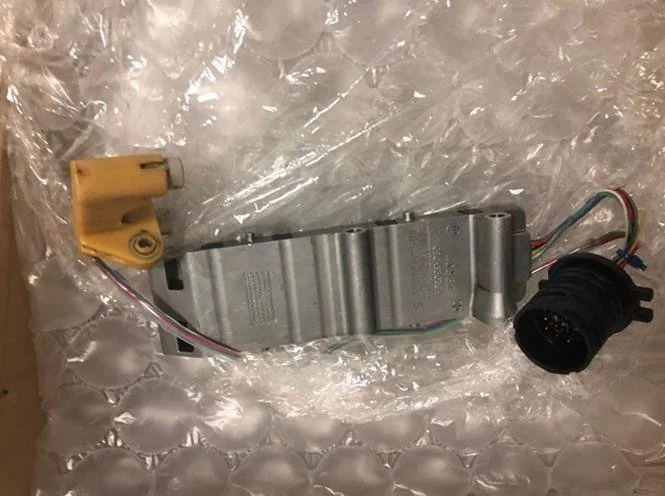
The original distance sensor assembly contains the shift rod position sensing package and is paired near the speed sensor assembly.
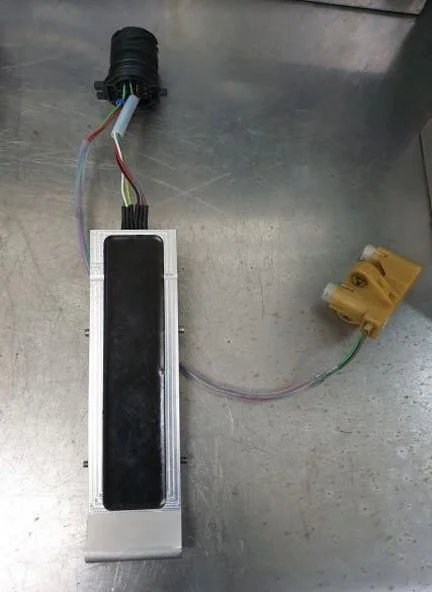
Aftermarket distance sensors such as T-Design made sensor-level repair possible without replacing the complete PDK.
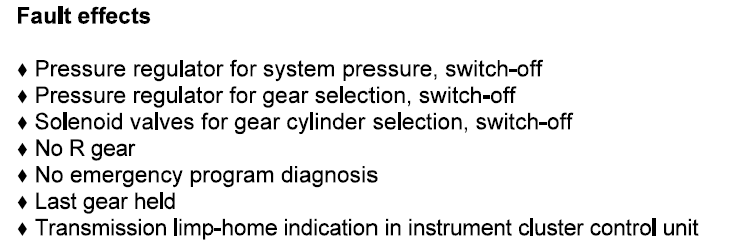
P1731 and related codes can force limp strategy and leave the transmission unable to continue shifting.
Common distance sensor clues
P1731, P1732, P1733, or P1734.
Related P1735, P1736, P1737, or P1738 short-term distance sensor faults.
Car stuck in a gear, missing reverse, or refusing to move after stopping.
Problem first appears hot, then becomes permanent.
PIWIS live values show one shift rod position channel stuck outside the valid range or behaving unlike the others.
Calibration fails because the TCU cannot correlate commanded movement with measured rod position.
Do not confuse it with these
A distance sensor fault can create secondary hydraulic and synchronization codes. The reverse can also happen: a hydraulic problem can make the TCU unhappy even if the distance sensor is reporting correctly. The thread consensus is that clear P1731 to P1734 faults are a strong distance sensor clue, but faults without P173x should push you to inspect hydraulics, pressure control, speed data, and calibration before condemning the distance sensor.
Replacement sensor options
The original ZF distance sensor part number was discussed in the thread as ZF 0501 325 775, but Porsche/ZF availability to the public was the core problem. As of the latest updates in the source thread and current supplier pages, replacement options now exist. T-Design advertises distance sensors for 7DT45 and 7DT70 units used in 911, Cayman, Boxster, and related models. Other aftermarket suppliers may exist with varying price, warranty, history, and quality.
Buying advice: Do not buy a distance sensor only because the listing says PDK. Confirm 7DT45/7DT70 fitment, your model, your VIN, your fault codes, warranty terms, and whether your shop has installed that supplier before. Avoid confusing Panamera parts with 911/Cayman/Boxster parts.
Access and repair overview
On a 911, replacing the distance sensor generally means removing the transmission and separating the gearbox end case. On Boxster/Cayman layouts, some owners and shops have reported access with the transmission still in the car because the end case faces rearward and can be reached after removing rear body/bumper structure. That does not make it easy. It just changes the access problem.
The distance sensor sits inside the gearbox section, which is why this repair is much more involved than a valve body repair.
The end case supports the shafts through bearings, so case separation must be controlled and even.
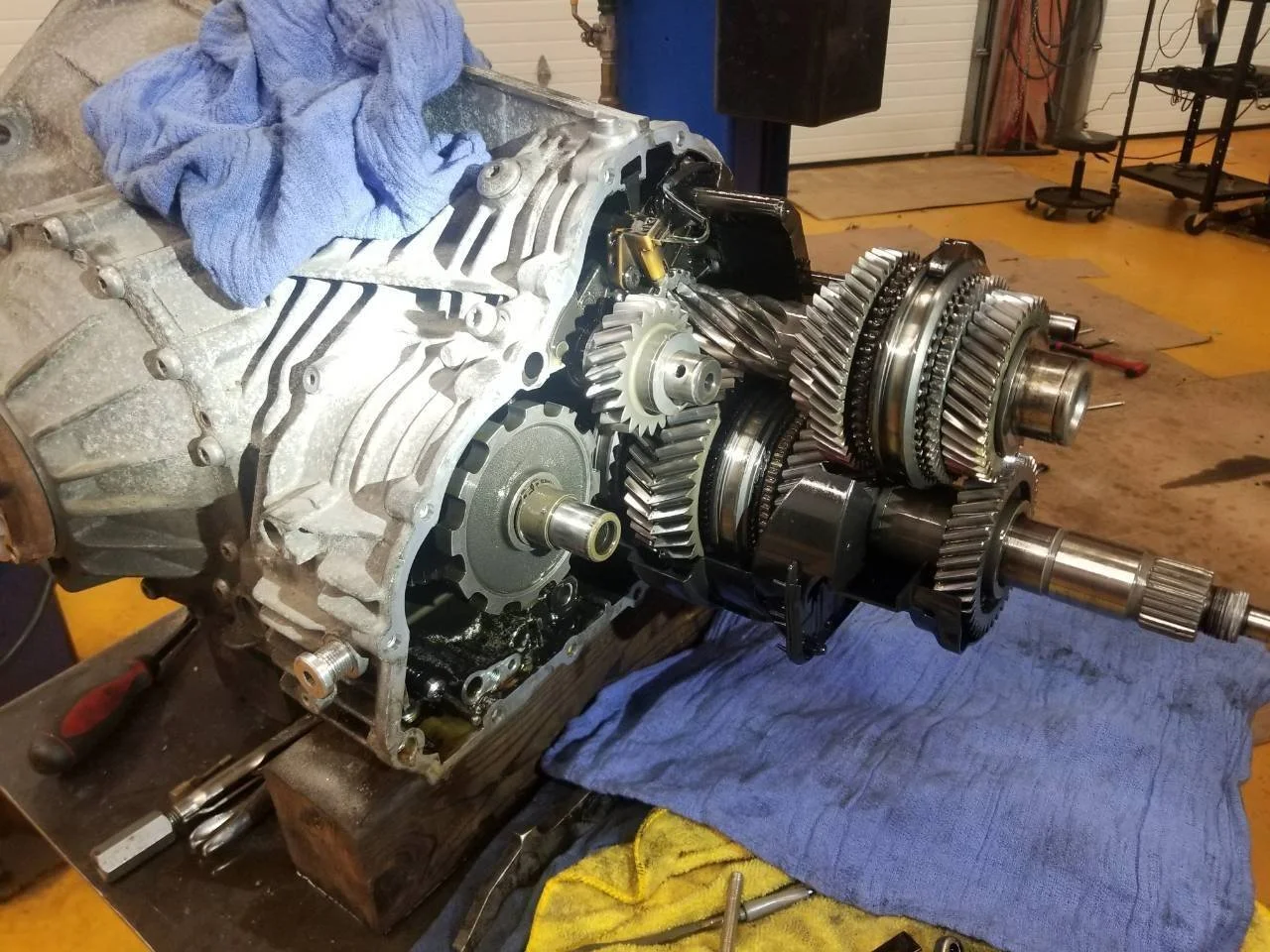
With the gearbox end case removed, the distance and speed sensors are accessible near the upper portion of the case.
End caps, circlips, and bearing lock nuts must be handled correctly before pulling the end case.
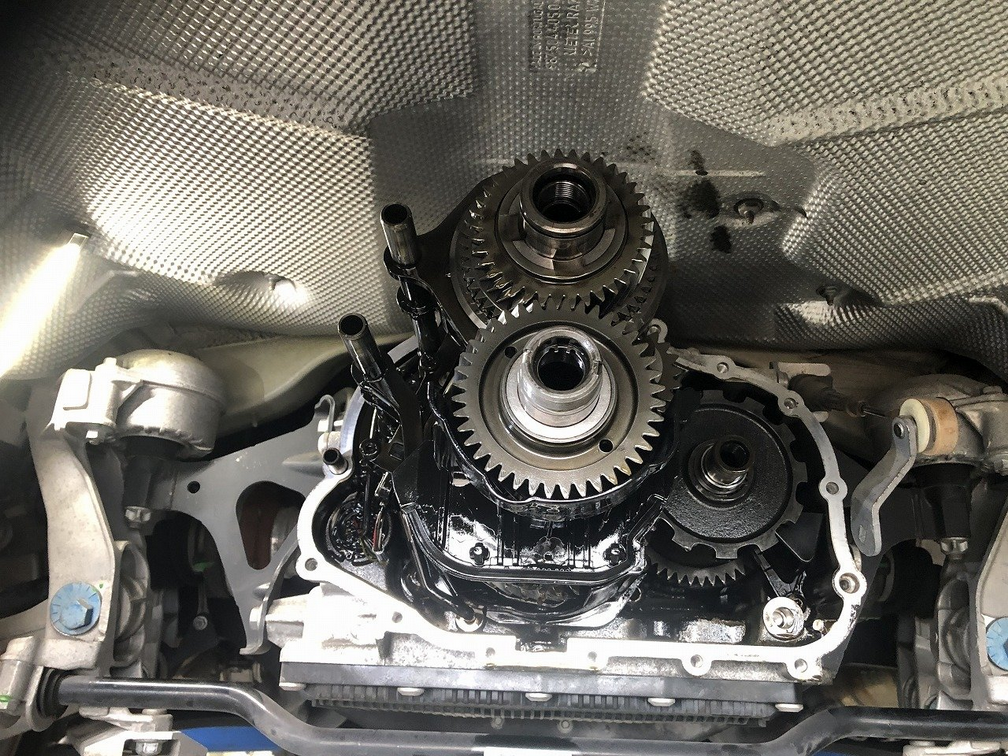
A puller setup should separate the end case evenly without prying on the case seam or stressing bearings.
Distance sensor replacement procedure overview
Confirm the fault with PIWIS live data before removing the transmission.
Drain the relevant fluids and remove the transmission if required for your chassis.
Document all connectors, brackets, lines, caps, and case fasteners before disassembly.
Remove the T-45 end case bolts and any additional side fasteners required by the case design.
Remove the black shaft end caps. Have replacements in hand before damaging old caps. The thread cites 9G1.321.360.00, but verify current part status and pricing.
Remove the circlips/snap rings and notched bearing lock nuts from the shaft ends.
Use a dual puller or equivalent fixture to pull the end case evenly while pushing against the relevant shafts. Do not pry at the seam.
Once open, unbolt and remove the distance sensor. Inspect the speed sensor and wiring while you are there.
Install the replacement sensor according to the supplier instructions. Some replacements require splicing into the original harness.
Reinstall the end case carefully, closing the gap evenly and watching for binding.
Use proper seal handling. The source thread did not identify an easily available replacement case gasket, so protect what you have unless current parts data says otherwise.
Refill with correct fluids, run PIWIS calibration/teach-in, confirm live values, and perform a cautious test drive.
Critical warning: Do not pry the case apart. The bearings remain with the end case and must come off the shafts evenly. Crooking the case can load the bearings and turn a sensor repair into a mechanical repair.
When to replace the speed sensor at the same time
Speed sensor failures appear less common than distance sensor failures, but they do exist. The original thread initially treated speed sensor failures as uncommon and difficult because no drop-in replacement was known. Later supplier pages now show replacement speed sensors for these PDK units. If the gearbox is already open for a distance sensor repair, it is worth discussing speed sensor replacement with the shop, especially if there are speed sensor faults, ratio faults, overtemperature faults that do not make sense, or a history of intermittent limp mode.
Repair Area 4: Speed Sensor Faults
What the speed sensors do
The speed sensor assembly measures the speeds of the two input shaft paths. The TCU uses that information to judge clutch slip, gear ratio, synchronization, and shift behavior. Bad speed data can make the transmission look like it is slipping or overheating even if the problem is sensor information rather than clutch destruction.
Common clues
P173B or P173C speed sensor circuit faults.
P0730, P0731, or P0732 ratio monitoring faults with confusing live behavior.
P17F0 to P17F2 overtemperature faults that may be calculated from apparent slip.
A distance sensor repair that does not resolve ratio/temperature behavior.
A car that locks into gear or refuses to move after a speed signal failure.
Repair reality
The speed sensor is inside the gearbox near the distance sensor. Access is therefore similar to a distance sensor repair. It is not a pan-down repair. If you are already inside the gearbox, replacing both distance and speed sensors may make sense depending on the evidence, part availability, budget, and shop experience.
Repair Area 5: Clutch Pressure Sensor Faults
What the pressure sensors do
The clutch pressure sensors tell the TCU whether hydraulic pressure is actually reaching the clutch circuits. If a sensor reports implausible pressure, the TCU may believe a clutch is not applying or releasing correctly. This can create no-drive behavior, harsh engagement, ratio faults, or clutch pressure codes.
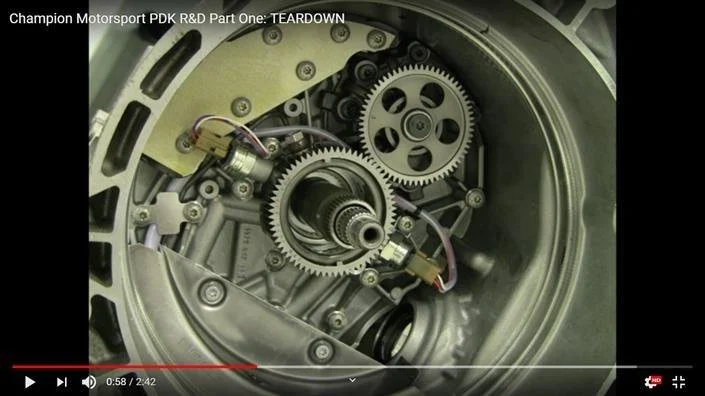
The clutch pressure sensors are hidden behind the clutch assembly, which is why the transmission must come out.
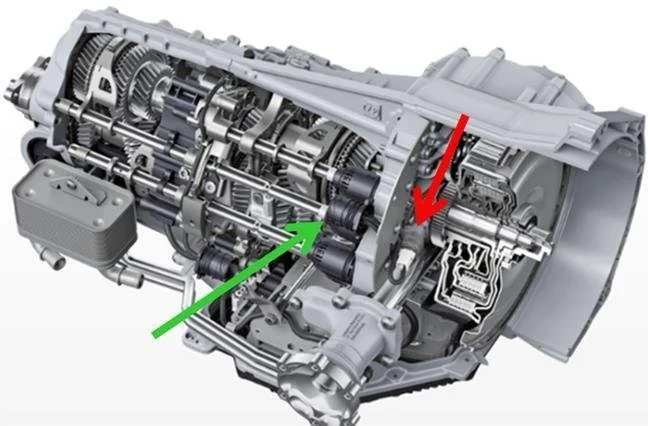
The pressure sensor connector path can be used for some diagnostic checks before full disassembly.
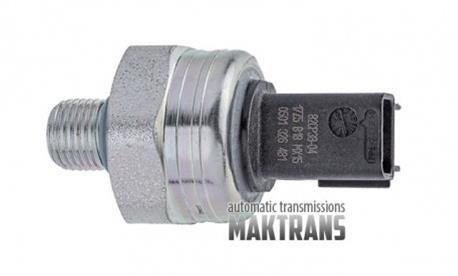
The pressure sensor is available as a replaceable part; verify current supersession by VIN.
Common codes and clues
P1706, often described as sensor supply voltage or clutch pressure sensor related.
P0841 and P0846 pressure sensor implausible values.
P17B1 and P17B2 clutch activation pressure faults.
Pressure values that do not match commanded clutch behavior in PIWIS.
No drive or delayed engagement when pressure control data does not make sense.
Important P1706 warning
The thread includes a useful correction: P1706 is often treated as a clutch pressure sensor problem, but a 5V reference issue can be caused by a short elsewhere in the sensor network or harness. One later case traced a 5V issue to an internal distance sensor short, and the problem resolved after replacing the distance sensor. The lesson is simple: measure the circuit before removing the transmission.
Parts
The thread cites pressure sensor part number 9G1.307.385.05 and ZF 0501 326 481. Current supplier listings show OEM pressure sensors under 9G130738505, 9G130738506, and related supersessions. This is VIN-specific territory. Verify the exact part before ordering.
Repair overview
Confirm pressure sensor or 5V supply behavior with live data and electrical checks.
Measure at the TCU connector if you have the correct pinout. The TCU side is often easier to access than the transmission connector.
If pressure sensors are confirmed, remove the transmission.
Remove the clutch assembly using the correct puller/slide-hammer method and document orientation before removal.
Replace the pressure sensors and inspect the harness/connectors.
Reinstall the clutch assembly carefully.
Refill, calibrate, and verify clutch pressure live values before road testing.
Common mistake: Do not remove the transmission for P1706 until you have ruled out a 5V reference, harness, or distance sensor short issue. Pressure sensors are replaceable, but labor is too high for guessing.
Repair Area 6: Clutch Wear, Clutch Failure, and Clutch Rebuilds
How common is actual clutch failure?
The thread consensus is that the PDK clutch assembly is generally robust. Actual clutch failure is less common than sensor or hydraulic faults. Failures are more likely on heavily modified cars, track-use cars, cars with severe overheating, cars with contaminated fluid, or cars that have been driven while slipping or malfunctioning.
Replacement and rebuild options
The original clutch assembly was treated as a sealed unit, but rebuild options have improved. Raybestos now lists friction clutch pack module RCP96-391 for Porsche PDK DCT 7DT70 applications, including six K1 and six K2 friction plates. The thread notes that Turbo applications use six disks per clutch and non-Turbo applications use five of the six. Rebuilding a clutch pack requires opening the housing on a lathe and welding it shut after replacement, which is normal work for some transmission rebuilders but not a typical home-garage procedure.
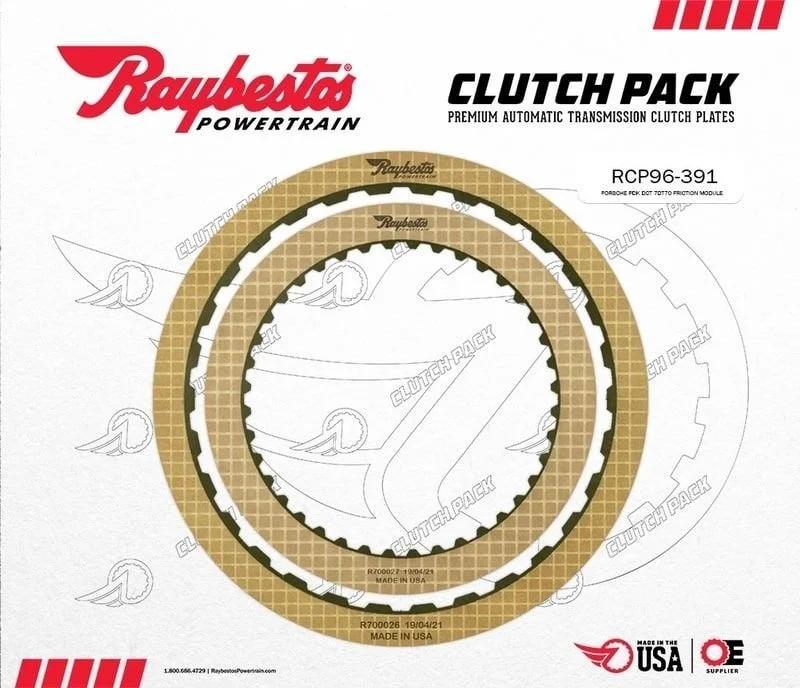
Aftermarket clutch friction sets have made some PDK clutch rebuilds more realistic for transmission rebuilders.
When to suspect clutch damage
Repeated ratio faults with verified correct speed sensor data.
Burnt fluid, heavy clutch debris, or shiny metallic contamination.
Live clutch slip values that match the symptoms.
Known high-torque engine build beyond the stock clutch rating.
Persistent clutch pressure/engagement failures after verified sensors, valve body, fluid, and calibration.
Fluid Service, Fill Procedures, and Why They Cause Confusion
Two fluids, two systems
PDK fluid discussions get messy because there are two fluid systems. The clutch/hydraulic fluid serves the valve body, clutches, and hydraulic controls. The gearbox oil lubricates the gearset side. These are not the same service, and the intervals, procedures, and fill requirements can vary by model and year.
Service interval caution
Many 997.2 discussions cite clutch/hydraulic oil service around 60,000 miles or 6 years and gearbox oil/pan/filter service around 120,000 miles or 12 years. Later model schedules can differ. Always verify against the maintenance booklet for your exact model year, market, drivetrain, and PDK revision. Do not let the word "lifetime" convince you that old, overheated, contaminated fluid is harmless.
When PIWIS matters
If you remove the pan, drop the valve body, open hydraulic circuits, or need to run fill/bleed functions, plan on PIWIS. The thread notes that a simple clutch fluid drain and refill may not always require PIWIS if the procedure only replaces the amount removed and does not require valve body removal, but that should be treated as a careful DIY exception rather than the default.
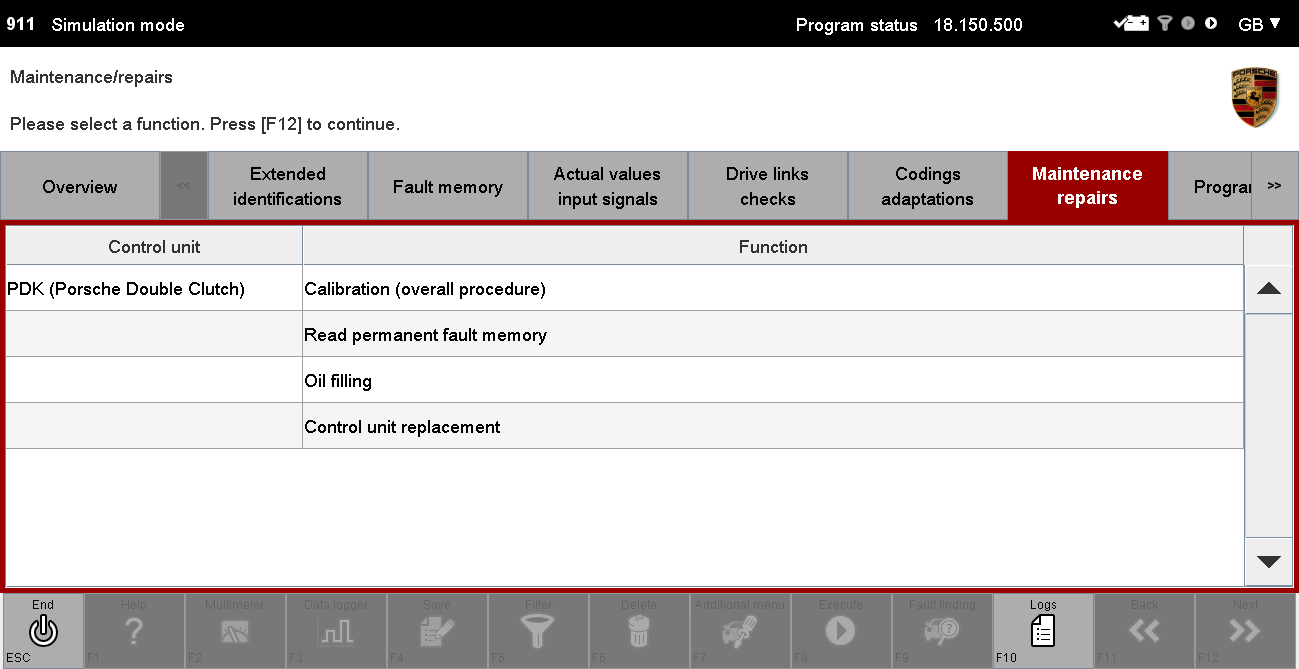
PIWIS maintenance functions are central to filling, bleeding, and calibrating the PDK correctly.
Fluid-related diagnostic clues
A problem that appears immediately after service may be a fill, fluid, connector, or calibration issue.
Low clutch fluid can create hydraulic gear selection faults and no-drive behavior.
Wrong fluid can damage shift quality and hydraulic behavior.
Overtemperature faults may come from real slip, bad temperature data, low fluid, cooling issues, or bad speed data.
Burnt smell, debris, or metallic material changes the repair decision. It may no longer be only a sensor problem.
Calibration, Adaptation, and Teach-In
What calibration does
Calibration teaches the TCU how the hardware responds. It correlates commanded solenoid action, clutch pressure behavior, shift rod movement, distance sensor values, and gearbox engagement. After replacing a valve body, solenoid, distance sensor, speed sensor, pressure sensor, clutch assembly, or TCU, the car usually needs PIWIS procedures before it is safe or functional.
When calibration will not save you
Calibration is not a magic repair. If a distance sensor signal is stuck outside the valid range, the TCU cannot learn around it. If the hydraulic system cannot move a shift rod, calibration may fail. If a pressure sensor circuit is shorted, calibration may produce confusing secondary codes. Fix the root cause first, then calibrate.
Common calibration-related codes
Practical advice: If you DIY the mechanical work but do not own PIWIS, coordinate with the shop before you start. Some PDK repairs leave the car unable to drive until the fill and calibration routines are completed.
Parts Required: Planning Reference
This table is a planning reference, not a shopping list. Porsche part numbers supersede, suppliers change, and many parts are VIN-specific.
Part numbers and suppliers change. Verify every PDK part by VIN, original transmission part number, and current supplier data before ordering.
| Part / subsystem | Part numbers or sources discussed | When used | Notes |
|---|---|---|---|
| Valve body / electrohydraulic control unit | 9G1.317.897.00 cited for 997.2; other revisions include 9G1.317.897.05, .010, .35. | Hydraulic/solenoid faults, missing gears, pressure regulation issues. | Verify existing part number before ordering. Later units may differ. |
| Valve body solenoids | Orange EDS 0501 214 958; white EDS 0501 214 959; black MV 0501 319 037. | Individual solenoid service. | Short orange solenoid was not confirmed in original thread. |
| Temperature sensor repair kit | 997.612.930.01 cited in thread. | P0711/P172D temperature sensor faults. | Verify kit and repair method. |
| Distance sensor / displacement sensor | ZF 0501 325 775 cited as original; T-Design and other aftermarket replacements now exist. | P1731 to P1734 and related P173x faults. | Requires gearbox access. Supplier quality varies. |
| Speed sensor | Aftermarket replacements now advertised by T-Design/LN Engineering and others. | P173B/P173C or confusing speed/ratio/overtemp behavior. | Usually replaced while gearbox is open. |
| Clutch pressure sensors | 9G1.307.385.05 / ZF 0501 326 481 cited; current listings include 9G130738505 and supersessions. | P1706, P0841, P0846, P17B pressure faults. | Transmission out and clutch removal required. |
| Shaft end caps | 9G1.321.360.00 cited in thread. | Distance sensor repair when end caps are removed/damaged. | Have replacements before opening. Price and availability may have changed. |
| Clutch friction plates | Raybestos RCP96-391 for 7DT70 applications. | Clutch rebuild by transmission specialist. | Not a normal DIY job. Housing must be opened and welded. |
| PDK fluids and pan/filter parts | VIN/model-specific Porsche-approved fluids and pan/filter parts. | Fluid service, valve body repair, transmission opening. | Do not mix clutch/hydraulic fluid and gearbox oil. |
Tools Required
| Tool | Needed for | Notes |
|---|---|---|
| PIWIS or Porsche-level diagnostic equivalent | Live data, fill routines, bleeding, calibration, teach-in, handover. | The most important non-hand tool in this guide. |
| Durametric or capable scanner | Reading PDK codes. | Useful, but not enough for commanded routines. |
| Quality multimeter | Solenoid resistance, temperature sensor resistance, pressure sensor/5V checks. | Do not probe blindly. Use correct pinouts. |
| Transmission jack / support equipment | Transmission removal and installation. | Required for distance, speed, and pressure sensor jobs on 911s. |
| T-45 and model-specific sockets | PDK case and valve body fasteners. | Confirm exact sizes before work. |
| Puller fixture / dual puller setup | Separating gearbox end case for distance/speed sensor access. | Do not pry the case seam. |
| Circlip/snap ring tools and bearing lock nut tools | Shaft end hardware during case opening. | Document orientation and order. |
| Clean fluid transfer/fill equipment | PDK fluid service and refill. | Keep fluid systems clean and separate. |
| Heat-resistant solder/crimp tooling and fluid-resistant heat shrink | Temperature sensor and some replacement sensor wiring. | Electrical repairs inside transmission fluid require proper materials. |
| Torque wrench | Valve body, case, pan, and mounting hardware. | Use confirmed torque data from workshop information and source diagrams. |
Repair Procedure: Choosing the Right Path
If you have P0711 or P172D
Confirm actual and ambient temperature values.
Measure temperature sensor resistance if possible.
Inspect wiring and previous repairs.
Replace/repair the temperature sensor circuit.
Refill correctly and confirm the temperature reading before driving.
If you have P1731 to P1734
Stop guessing and pull PIWIS live distance sensor values.
Check whether the corresponding channel is stuck outside the valid range or shows an impossible duty factor.
Inspect accessible harnesses and connectors before condemning the internal sensor.
If confirmed, choose an experienced PDK shop and replacement sensor supplier.
Discuss replacing the speed sensor while the gearbox is open.
Run calibration/teach-in after repair and save before/after live values.
If you have P1706, P0841, or P0846
Check 5V supply and pressure sensor signal behavior at the TCU or transmission connector.
Determine whether the pressure sensor itself is bad or whether another sensor/harness is pulling down the reference.
Use live pressure data to compare commanded and actual behavior.
Only remove the transmission for pressure sensors after electrical diagnosis supports it.
After replacement, refill, calibrate, and confirm pressure readings.
If you have P17D0 to P17D9, P1764, P1765, P177C, or P17DA
Check whether a P173x distance sensor code is also present.
Check fluid level and recent service history.
Monitor shift rod movement and commanded gear selection in PIWIS.
Check valve body solenoid resistance/current and hydraulic behavior.
If the valve body is suspect, repair or replace it and run the required calibration.
If calibration fails at the same shift rod step repeatedly, revisit distance sensor and mechanical movement.
If you have P0730, P0731, P0732, or P17F0 to P17F2
Do not assume the clutch is destroyed immediately.
Check actual temperature and calculated temperature behavior.
Compare speed sensor values to vehicle speed, gear, and clutch pressure.
Check fluid level, fluid condition, and cooling path.
Check clutch pressure and valve body pressure regulation.
If slip is real and debris is present, prepare for clutch or internal repair.
Troubleshooting After Repair
The car still will not calibrate
A failed calibration is information. Record the exact PIWIS step where it fails. A failure during shift rod calibration points you back toward distance sensor values, gear selection hydraulics, mechanical movement, or wiring. A failure during clutch teach-in points toward clutch pressure, clutch sensor data, fill status, or clutch mechanical condition.
The original code is gone but new software/coding codes appear
This can happen after TCU programming, replacement, or a partially completed calibration. Codes such as P174B or P18B4 should push you to PIWIS coding, variant configuration, and control unit pairing before blaming the gearbox.
The car drives but shifts badly
Check whether all teach-in steps completed successfully. Confirm fluid temperature and fill level. Confirm clutch pressure values, speed sensor values, and adaptation status. Some shift quality issues after repair are calibration or fill problems, not failed hardware.
A distance sensor was replaced but faults return
Do not automatically blame the new distance sensor. Check speed sensor data, wiring, calibration, and whether the original symptoms included ratio or temperature faults. Some later thread cases suggest speed sensor issues can remain after distance sensor work if the speed sensor was the actual or additional problem.
There is grinding, metal, or heavy debris
Stop. This changes the repair category. A sensor or valve body repair assumes the mechanical transmission is fundamentally healthy. Grinding noises, heavy clutch debris, metallic material, damaged bearings, or contaminated fluid require specialist inspection.
Common Mistakes
Approving a full transmission replacement from one generic fault code.
Reading only P0700 and not the PDK control unit faults.
Clearing codes before saving the report.
Assuming P1706 always means pressure sensors without checking the 5V reference circuit.
Assuming P17F0 to P17F2 always means a bad temperature sensor.
Replacing the distance sensor when the problem is actually valve body hydraulics, or replacing the valve body when a clear P173x distance sensor code is present.
Buying a Panamera part for a 911/Cayman/Boxster PDK.
Using a valve body that looks right but has the wrong revision or missing features.
Removing the wrong valve body screws.
Prying the gearbox end case apart instead of using a controlled puller.
Opening the gearbox without replacement caps, seals, clean work space, or a calibration plan.
Skipping PIWIS fill, bleed, handover, teach-in, or calibration routines after repairs that require them.
Road-testing a car that is grinding, binding, or refusing gear engagement.
Community Lessons From the 112-Page Thread
1. The forum solved what the official repair path often ignored
The strongest theme is that owners and independent specialists proved the PDK could be repaired at the component level. The early assumption that internal sensor faults meant a disposable gearbox did not hold up once people opened transmissions, documented the sensor locations, and shared results.
2. Later corrections matter more than early guesses
The first post was already valuable, but the thread became much better over time. Early uncertainty around the distance sensor repair turned into documented gearbox-opening procedures. Speed sensor replacement went from obscure to practical. Pressure sensor pinouts and 5V reference behavior became clearer. A good article has to synthesize the whole thread, not preserve the first version untouched.
3. PIWIS live data is the difference between diagnosis and storytelling
The best repair reports used live data: shift rod positions, sensor duty factors, clutch pressure values, speed values, temperature values, and solenoid current. The worst diagnostic paths jumped from a code to a part to a replacement transmission.
4. PDK shops are becoming a specialty
At the beginning of the thread, many owners struggled to find anyone willing to open a PDK. By the later pages, more shops were performing distance sensor, speed sensor, valve body, and pressure sensor work. That is good for owners, but it also means quality varies. Ask for experience, not just willingness.
5. Some repairs are cheap in parts and expensive in access
A temperature sensor or pressure sensor may not be expensive as a part. The labor and calibration around it can still be substantial. That is why diagnosis matters. A $100 part behind the clutch is not a $100 repair.
Department69 Verdict
The PDK is not a disposable transmission. It is a sophisticated, hydraulically controlled dual-clutch gearbox with several repairable weak points. For 997.2, 987.2, 991.1, and 981 owners, the difference between a financially painful repair and a car-saving repair is usually diagnosis.
If you get a PDK fault, do not panic and do not approve a replacement gearbox until someone has read the real PDK codes, looked at live data, checked the relevant circuits, and explained why the failure is mechanical rather than sensor, hydraulic, fluid, calibration, or TCU related.
The best outcome is not always DIY. The best outcome is informed repair. Sometimes that means replacing a temperature sensor. Sometimes it means a valve body. Sometimes it means a distance sensor and speed sensor with the gearbox opened by a specialist. Sometimes it really does mean a rebuild or replacement. But now you know how to ask the next question before writing the biggest check.
Reminder
We did our best to make this comprehensive and useful. The foundation is the original Rennlist thread and the many members who documented their failures, fixes, mistakes, and updates in public. If this guide helps you, read the source thread and support the forums where this knowledge was built.
As always, proceed at your own risk. PDK repairs can involve heavy drivetrain work, internal transmission components, high-value parts, calibration routines, and safety-critical systems. This article is a research-backed enthusiast guide, not a warranty, workshop manual, or substitute for Porsche service information. Verify parts by VIN, confirm procedures with current technical documentation, and consult a qualified Porsche specialist if you are unsure.
FAQs
Is the Porsche PDK transmission repairable?
Yes. The early 7DT45 and 7DT70 PDK units are repairable at the component level in many cases. Common repairable areas include the valve body, solenoids, temperature sensor, distance sensor, speed sensor, clutch pressure sensors, fluid service, and calibration. Some mechanical failures still require rebuild or replacement.
Does a P1731, P1732, P1733, or P1734 code mean I need a new transmission?
Usually no. These codes strongly point toward the distance sensor or shift rod position sensor system. Porsche dealers historically often recommended complete transmission replacement, but aftermarket distance sensors and documented repair procedures now make component repair possible.
What is the PDK distance sensor?
The distance sensor measures the position of the shift rods inside the gearbox. The TCU uses that signal to confirm that commanded gear changes actually occurred. If the signal is implausible, the transmission may enter limp mode, get stuck in gear, or refuse to move.
Can the PDK valve body be replaced without removing the transmission?
On the 997.2/987.2 style PDK, the valve body is accessible by removing the pan. The transmission does not need to come out for valve body access, but the job still requires clean work, correct parts, correct fluid filling, and calibration.
Can individual PDK solenoids be replaced?
Yes, individual ZF solenoids can be replaced in principle, and the thread identifies several ZF part numbers. The hard part is diagnosis. Replacing a solenoid only makes sense if you have strong evidence that solenoid is the fault.
What does P0711 or P172D usually mean on a PDK?
These codes point toward a clutch fluid temperature sensor or temperature signal issue. On early PDK units this can be a repairable sensor/wiring problem, not a destroyed transmission.
What does P1706 mean on a PDK?
P1706 is often associated with clutch pressure sensor or 5V sensor supply faults. It can be a pressure sensor problem, but the thread also documents cases where another sensor or harness issue pulled down the 5V reference. Test before removing the transmission.
Can a Durametric diagnose PDK problems?
Durametric can read many PDK codes, which is useful. It cannot perform the full PIWIS commanding, fill, bleed, teach-in, and calibration routines needed for many repairs.
Do I need PIWIS after a PDK repair?
For most valve body, solenoid, distance sensor, speed sensor, clutch pressure sensor, clutch, TCU, or pan/valve body work, yes. Some simple fluid drain/refill work may be possible without PIWIS if done carefully, but PIWIS is the safer standard.
Can I drive with a PDK warning?
If the warning is red, the car will not select gears, it is grinding, or it is stuck in limp mode, do not keep driving. Flatbed it. Brief intermittent warnings still need diagnosis because heat-related sensor failures can become permanent.
Are PDK clutches weak?
Generally no. The clutch assemblies are robust in stock or near-stock cars. Clutch failure is more likely with high torque builds, severe overheating, contamination, or long-term slipping.
Should I replace the speed sensor when replacing the distance sensor?
It depends on the fault data and budget. Because the speed sensor is accessed while the gearbox is open, many shops will discuss replacing it at the same time, especially if there are speed, ratio, or overtemperature clues.
Can I use Panamera PDK parts in a 997 or Cayman?
Do not assume that. The Panamera PDK is a different unit, and parts that look similar or share generic descriptions may not fit 911, Boxster, or Cayman 7DT45/7DT70 applications.
What should I ask a shop before authorizing a PDK repair?
Ask whether they can read PIWIS live values, perform PDK fill and calibration routines, replace distance and speed sensors, replace valve bodies, diagnose pressure sensors, and provide before/after fault reports. If their only answer is replacement transmission, get a second opinion if the car is out of warranty.
References, Source Notes, and Community Credit
Primary source: this article is built from the exported 112-page Rennlist thread and later updates through the source export used during drafting. The published article should link to the forum near the top, not only at the bottom, because the Rennlist community is the reason this knowledge exists in a usable public form.
Rennlist 997 Forum: Guide to Repairing a PDK Transmission - original long-running thread started by PV997 and expanded by the Rennlist community.
Rennlist member: PV997 - original thread starter and main organizer of the early PDK repair research.
Rennlist 997 Forum: Repairing my PDK gearbox - experience and guide - teardown/gearbox-opening documentation referenced by the main thread.
Rennlist 987/981 Forum: PDK repair summary - parallel thread for related 987/981 PDK repair discussion.
Planet-9: DIY PDK clutch fluid and gear oil change without using PIWIS fill mode - useful background on fluid service discussion and fill-mode debate.
Porsche Stories: What is PDK? - official high-level PDK explainer.
Gears Magazine: ZF’s Porsche DoppelKupplung PDK Transmission - background on dual-clutch operation and gear-family logic.
IPB Autosport: PDK in-house repairs - independent-shop reference for distance sensor faults, PIWIS confirmation, and related codes.
T-Design: PDK displacement/distance/gear position sensor - aftermarket distance sensor reference.
LN Engineering: Porsche PDK speed sensor - aftermarket speed sensor reference.
Europa Parts: ZF PDK clutch pressure sensor 9G130738505 - pressure sensor availability reference.
Raybestos Powertrain: RCP96-391 Porsche PDK DCT clutch pack - clutch friction pack availability reference.
Part-number caution: supplier pages, prices, availability, supersessions, and fitment notes change. Treat all supplier links as research starting points. Verify by VIN through a current Porsche parts catalog, dealer parts counter, or specialist before ordering anything.