The Porsche 996 IMS Bearing: Risk, Reality, and What to Do About It
Every prospective 996 buyer eventually has the conversation. Sometimes it comes from a well-meaning acquaintance who once heard something about Porsches and engines. Sometimes it's the third Rennlist thread you've read at midnight before putting in an offer. Sometimes it's a PPI report with a paragraph that starts "the IMS bearing..." and suddenly the whole deal feels different.
The intermediate shaft bearing is the 996's most-discussed mechanical concern — and also one of the most misunderstood. Depending on who you ask, it's either a death sentence for the M96 engine or an overblown internet scare that belongs in the same file as "don't run 87 octane once." The truth sits somewhere between those positions, and leaning toward either extreme makes you worse at buying or owning one of these cars.
What the IMS Bearing Is, and Why It Fails
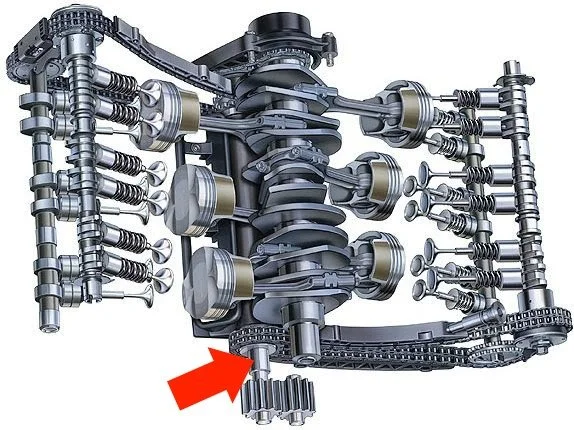
The M96 engine — the flat-six powering every 996 Carrera built between 1998 and 2005, along with the 986 Boxster sharing the same architecture — uses an intermediate shaft that drives the camshafts through a timing chain. The shaft rides on a ball bearing at the rear of the engine, pressed into the case and lubricated by engine oil.
That design is the problem. The bearing uses a rubber seal that degrades over heat cycles and time. When the seal goes, oil stops reaching the bearing reliably. The bearing runs progressively drier. Eventually — sometimes gradually, with metallic debris showing up in oil samples; sometimes suddenly, with no warning at all — the bearing fails.
When it fails, it usually takes the engine with it. A catastrophic IMS bearing failure typically means a full engine rebuild or replacement. That's an $8,000–$15,000 repair depending on the shop and what they find inside.
Which 996s Are Affected
All 996-generation Carreras with the M96 engine are affected — that covers the 996.1 (1998–2001) and 996.2 (2002–2005) Carrera, Carrera 4, Targa, and Cabriolet. The 986 Boxster and Boxster S share the engine family and carry the same exposure.
The 996 GT3 is a different story. The GT3 uses the Mezger engine — a motorsport-derived unit also found in the 996 Turbo and GT2 — which doesn't use an intermediate shaft bearing in the same way. Mezger-engined 996s are not affected. This is one of the concrete mechanical reasons GT3 values carry a significant premium above comparable Carreras: you're partly paying to eliminate the question.
The 997.1 (2005–2008) non-turbo Carrera continued with the M97, a refined M96 derivative that still has an IMS bearing — Porsche improved the design but didn't eliminate it. The 997.2 (2009–2012) switched to a direct-drive cam system with no intermediate shaft. If buying a 997 and avoiding the topic entirely is the goal, a 997.2 is the clean answer.
The Actual Failure Rate — and Why the Numbers Are Slippery
Pelican Parts, which has been tracking IMS bearing failures for well over a decade, has estimated failure rates somewhere in the 1–8% range over the engine's lifetime. That's a wide band, and it's wide for a reason: failure correlates strongly with maintenance history.
Engines that received regular oil changes — 5,000-mile intervals or shorter — on quality oil, were driven frequently rather than sitting, and have fewer than 80,000 miles on the original bearing show meaningfully lower failure rates than engines with gaps in the service record, unknown oil history, or extended periods of storage.
The range also reflects that "failure" can mean different things. Gradual bearing wear sometimes produces metallic particles in the oil, which shows up on an oil analysis before anything mechanical happens. That's a recoverable situation — you have information, and you can act on it. A sudden, catastrophic failure with no preceding symptoms is a different category of event, and it does happen.
One percent sounds small until you're the one percent. And unlike a failed water pump or a cracked expansion tank, there's no warning light for a bearing that's about to let go.
The Three Options Every 996 Owner Has
Do nothing. A legitimate choice, with caveats. If you're buying a car with documented short-interval service history, fewer than 80,000 miles on the original bearing, and a clean oil analysis, the case for doing nothing is defensible. The bearing may outlast the engine, the car, or your ownership of it. Some owners make this bet knowingly.
Install the LN Engineering IMS Solution. LN Engineering spent years developing a replacement that uses a more robust sealed bearing design, eliminating the original's reliance on an oil-bathed rubber seal. The LN Engineering solution is the dominant retrofit in the market and has enough track record by now that it's genuinely trusted — but you need to order the correct kit for your car's bearing type: IMS Solution for 1997–1999 (dual-row bearing) or IMS Solution for 2000–2005 (single-row bearing). Parts run roughly $400–$700 depending on spec; labor is the bigger variable because the job requires pulling the engine.
Buy a car that already has it done. This is increasingly common in the enthusiast market, and it's the cleanest path for buyers who don't want to think about this after purchase. A documented IMS retrofit — with receipts from a reputable Porsche specialist — is worth paying a premium for, especially if the clutch kit and rear main seal were replaced at the same time — which they should be, since the transmission is out anyway.
What the Retrofit Actually Costs
The IMS bearing sits at the back of the engine. Accessing it means pulling the engine and transmission, which is a substantial job. Because the labor is already there, most owners doing the retrofit treat it as a planned event and knock out several other items simultaneously:
IMS bearing replacement (LN Engineering solution or equivalent)
Clutch and flywheel replacement (you're already out)
Rear main seal
Coolant hoses, if they haven't been refreshed
Parts for the full package typically run $1,500–$2,500 depending on whether you go OEM or aftermarket on the clutch. Labor at an independent Porsche specialist is usually $1,500–$3,000; dealers charge more.
Total for the complete service done properly: roughly $3,000–$5,500.
That number matters when evaluating a 996 that hasn't had the work done. The seller's asking price should reflect it. A car priced as if the IMS is someone else's problem isn't a deal — it's a transfer of liability.
What a Pre-Purchase Inspection Should Cover
A pre-purchase inspection from a Porsche specialist — not a general mechanic — should explicitly include an assessment of the IMS bearing. Ask whether the shop can check for bearing play and what they look for. No PPI is a guarantee; the bearing can present as fine and still fail. But a thorough inspection tells you a lot about how the rest of the car has been maintained, which is strongly correlated with bearing condition.
Don't skip oil analysis on a used 996 with murky service history. An oil analysis kit runs about $30 and can show elevated wear metals — particularly iron — that indicate bearing distress before anything shows up mechanically. It's the cheapest piece of information available at this price point.
More context on what makes a 996 worth buying lives in our Porsche coverage at Department 69, which runs through the full ownership picture across the 996 and 997 generations.
Frequently Asked Questions
What is the IMS bearing failure rate on the Porsche 996?
Pelican Parts and independent researchers estimate the failure rate at roughly 1–8% over the engine's lifetime, with risk climbing with age, mileage, and infrequent oil changes. The range is wide because maintenance history matters significantly — an engine with consistent short-interval oil changes and regular use has lower exposure than one with gaps in service records or extended storage periods.
Should I buy a 996 with the IMS solution already done?
Generally yes, and it's reasonable to pay a premium for it. A properly documented IMS retrofit — done by a reputable Porsche specialist, with receipts, ideally alongside a clutch and rear main seal replacement — eliminates the primary engine failure risk on the M96. That documentation is worth money. A car without it isn't necessarily a bad buy, but the cost of the work should factor into what you're willing to pay.
Can I drive a 996 without doing the IMS retrofit?
Many people do, and many of those engines are still running fine. The decision comes down to risk tolerance and the quality of the service history. A high-mileage car with unknown maintenance records is a different proposition than a well-documented 45,000-mile example from a single owner. Know which one you're buying before you decide.
Does the 997 have the IMS bearing problem?
The 997.1 (2005–2008) uses the M97 engine, which still has an intermediate shaft bearing — Porsche improved the design but didn't eliminate the concern. The 997.2 (2009–2012) switched to a direct-drive cam system with no IMS bearing and is not affected. If you want to avoid the question entirely, a 997.2 Carrera S is the cleaner path.
What makes the 996 GT3 different from a regular Carrera?
The 996 GT3 uses the Mezger engine — the motorsport-derived unit also found in the 996 Turbo and GT2 — which has a fundamentally different architecture and is not affected by the IMS bearing failure mode. This is one of the concrete mechanical reasons GT3 values are substantially higher than comparable Carreras: buyers are paying partly for the absence of the M96's primary risk factor, alongside the performance credentials.